
This is such a HOT topic among so many. I don’t want to cause any controversary just do a bit of sharing. (I am not an expert, just am sharing a bit of info) We travel a lot to areas in the sun so sunscreen is essential for us to be outside. What kind of sunscreen is best, what strength, how often? where do buy it?….. Let’s dive in…
What do sunscreen do to skin?
Regular daily use of SPF 15 sunscreen can reduce your risk of developing squamous cell carcinoma (SCC) by about 40 percent, and lower your melanoma risk by 50 percent. Help prevent premature skin aging caused by the sun, including wrinkles……
SPF Level: Sunscreens tend to be judged on how much protection they offer — which is conveyed by SPF, or sun protection factor. This is the measure of how much radiation is needed to cause a sunburn. The higher the SPF, the lower the chance of sunburn. According to our experts, you should be using an SPF of at least 30, which blocks 97 percent of UVB rays. SPF refers specifically to UVB rays, but you should be looking for broad-spectrum formulas, which protect from both UVA and UVB rays. No matter what SPF level you choose, you need to make sure you reapply — more when the sun is at its most intense, but at least every two hours.
Chemical or mineral: Our experts say to look for mineral (also known as physical) sunscreen if you’ve got sensitive skin or heat sensitivities, or if you’re using the sunscreen on babies 6 months or younger because the mineral formulation sits on top of skin to physically block UVA and UVB rays, as opposed to chemical formulations that sink into skin and absorb rays, which can cause irritation in more sensitive skin. Chemical sunscreens use ingredients like oxybenzone, avobenzone, homosalate, octinoxate, octocrylene, and octisalate for sun protection. When applied, it triggers a chemical reaction that absorbs the sun’s rays and turns it into heat before releasing it from the body. This process takes about 15 minutes to get started, so you should wait at least this long post-application before heading into the sun. Mineral formulas, on the other hand, sit on top of the skin and work immediately. Chemical formulas have been under scrutiny as of late, due to the fact that some studies suggest ingredients like oxybenzone and octinoxate have been shown to bleach coral reefs. Some ingredients have also been linked to endocrine disruption, although it hasn’t been deemed conclusive, and the FDA (which regulates sunscreen formulations generally) continues to allow their use.
Mineral sunscreens work by scattering light, using physical blockers like zinc and titanium oxide. Both are often recommended for sensitive skin because they don’t tend to be sensitizing. Zinc oxide is good for hyperpigmentation in particular, and is thus a favorite of dermatologists for patients with melasma. On the flip side, mineral formulas tend to be chunkier and pasty, presenting a challenge for deeper skin tones. Formulas have improved as of late, though, thanks to nano-size zinc- and titanium-oxide particles that rub in and blend more easily. Strategist contributor and longtime beauty writer Hannah Morrill told us that another reason to consider mineral sunscreens is because some chemical ones contain oxybenzone, which research indicates can significantly destroy coral-reef ecosystems.
Contains oxybenzone, homosalate, and octisalate: Chemical sunscreens have been a topic of discussion for the past five years or so, with studies linking ingredients like oxybenzone, homosalate, and octisalate to endocrine disruption. The data isn’t conclusive here, but we’ve mentioned when and if they’re present, along with the concentration of said ingredients.
Consistency: When it comes to sunscreens, consistency can be the difference between an SPF you’ll reach for every day and something you’ll only reach for when you have to begrudgingly apply for the beach. Sunscreens with thicker consistencies can be good for the body, but not so much for the face, which tends to be more sensitive and reactive to heavier, greasier formulations. Thick sunscreens might not be great if you have an oilier skin type, and thus a lightweight, serumlike option could be best for you.
What type of sunscreen should I use?
The best type of sunscreen is the one you will use again and again. Just make sure it offers broad-spectrum (UVA and UVB) protection, has an SPF of 30 or higher, and is water-resistant.
The kind of sunscreen you use is a matter of personal choice and may vary depending on the area of the body to be protected. Available sunscreen options include lotions, creams, gels, ointments, wax sticks, and sprays.
- Creams are best for dry skin and for the face.
- Gels are good for hairy areas, such as the scalp or male chest.
- Sticks are good to use around the eyes.
- Sprays are sometimes preferred by parents since they are easy to apply to children.
However, the challenge in using sprays is that it is difficult to know if you have used enough sunscreen to cover all sun-exposed areas of the body, which may result in inadequate coverage. When using spray sunscreen, spray until your or your child’s skin glistens, and rub it in afterwards to ensure even coverage. Do not inhale these products or apply near heat, open flame or while smoking. To avoid inhaling spray sunscreen, never spray it around or near the face or mouth. Spray the sunscreen into your hands and then use your hands to apply it on your face. When applying spray sunscreens on children, be aware of the direction of the wind to avoid inhalation. - Tinted sunscreens, which contain the active ingredients zinc oxide and/or titanium dioxide, can help reduce the white “residue” that can be left on the skin and can help prevent skin darkening that may occur from exposure to visible light from the sun, particularly in dark-skinned individuals.
These are a few of my favorites…..
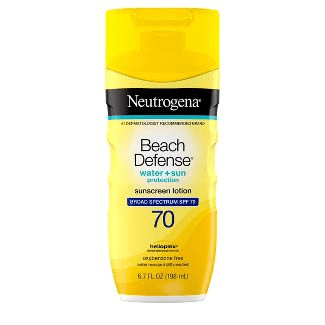
I also have had great luck with this one… https://www.target.com/p/continuous-sport-sunscreen-spray-up-up/-/A-82390095?preselect=80139768#lnk=sametab
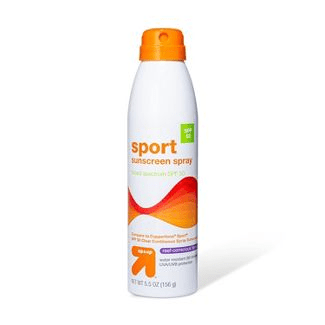
If you prefer a lotion this one works great, my mom uses it… https://www.target.com/p/neutrogena-ultra-sheer-sunscreen-lotion-spf-70-3-fl-oz/-/A-80839024#lnk=sametab
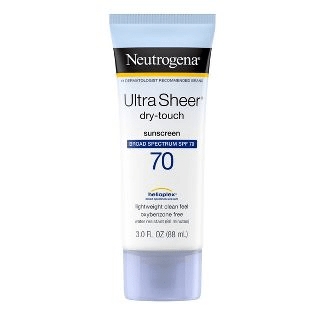
If you want a stick for face and hair parts… https://www.target.com/p/kid-39-s-sport-sunscreen-stick-spf-55-0-47oz-2pk-up-38-up-8482/-/A-80115678#lnk=sametab
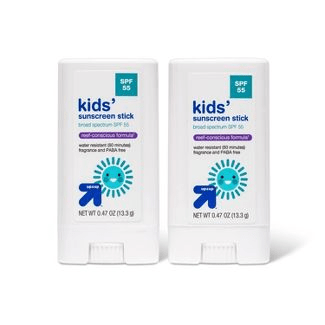
What happens if you get too much sun….. (PLEASE DONT DO THIS, you will ruin your vacation)… here are a few tips:
Try these self-care tips for sunburn relief:
- Take a pain reliever. …
- Cool the skin. …
- Apply a moisturizer, lotion or gel. …
- Drink extra water for a day. …
- Leave blisters alone. …
- Treat peeling skin gently. …
- Take an anti-itch drug. …
- Apply a soothing medicated cream
According to the American academy of dermatology association:
Your skin can burn if it gets too much sun without proper protection from sunscreen and clothes. To help heal and soothe stinging skin, it is important to begin treating sunburn as soon as you notice it. The first thing you should do is get out of the sun—and preferably indoors.
Once indoors, these dermatologists’ tips can help relieve the discomfort:
- Take frequent cool baths or showers to help relieve the pain. As soon as you get out of the bathtub or shower, gently pat yourself dry, but leave a little water on your skin. Then, apply a moisturizer to help trap the water in your skin. This can help ease the dryness.
- Use a moisturizer that contains aloe vera or soy to help soothe sunburned skin. If a particular area feels especially uncomfortable, you may want to apply a hydrocortisone cream that you can buy without a prescription. Do not treat sunburn with “-caine” products (such as benzocaine), as these may irritate the skin or cause an allergic reaction.
- Consider taking aspirin or ibuprofen to help reduce any swelling, redness and discomfort.
- Drink extra water. A sunburn draws fluid to the skin’s surface and away from the rest of the body. Drinking extra water when you are sunburned helps prevent dehydration.
- If your skin blisters, allow the blisters to heal. Blistering skin means you have a second-degree sunburn. You should not pop the blisters, as blisters form to help your skin heal and protect you from infection.
- Take extra care to protect sunburned skin while it heals. Wear clothing that covers your skin when outdoors. Tightly-woven fabrics work best. When you hold the fabric up to a bright light, you shouldn’t see any light coming through.
Although it may seem like a temporary condition, sunburn—a result of skin receiving too much exposure from the sun’s ultraviolet (UV) rays—can cause long-lasting damage to the skin. This damage increases a person’s risk for getting skin cancer, making it critical to protect the skin from the sun.
For questions about your sunburn or to learn how to better protect your skin from the sun, see a board-certified dermatologist.
If you get accidently get burned, take a day out of the sun, go shopping, explore some new restaurants, take a drive. If you are really worried they sell amazing rash guards all over Hawaii….


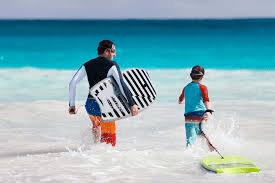
My two cents… wear sunscreen, be smart, enjoy your vacation…….
Cheers ~Kristi
 Let your adventure begin
Leave a comment